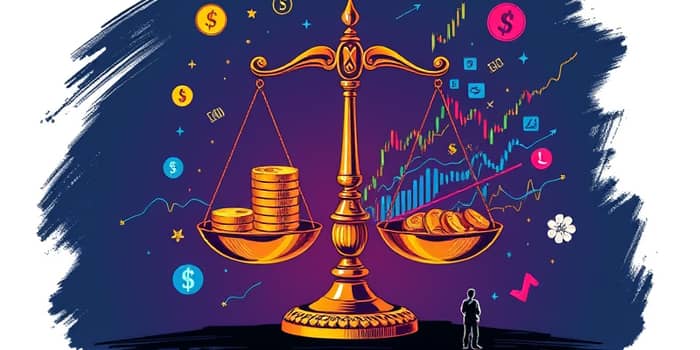
Speculation occupies a contested place in our economic and moral landscape, raising profound questions about profit, fairness, and social responsibility. As financial markets evolve, so too must our understanding of the ethical stakes involved in betting on price movements rather than productive value.
At its core, speculation refers to engaging in financial transactions with the primary goal of profiting from anticipated fluctuations in market prices, rather than deriving value from the asset’s inherent utility or long-term yield. Unlike investment, which emphasizes steady growth and productive contribution, speculation is focused on short-term gains and rapid buying and selling.
It is crucial to distinguish between speculation and manipulation. While speculation itself is not illegal or inherently unethical, manipulation involves deceptive or fraudulent strategies that artificially distort market prices and breach principles of fairness and transparency.
Speculative practices have drawn moral scrutiny for centuries. In ancient and medieval societies, financial wagering was often equated with gambling, condemned by religious and civic authorities for its risk of fostering vice and social disorder.
By the 17th century, thinkers began shifting focus from the character of speculators to the consequences of their actions. Utilitarians and early economists debated whether speculative activities served public interests by providing liquidity and price discovery or whether they amplified volatility and systemic risk.
These frameworks provide tools for evaluating whether speculation aligns with broader social goods or undermines public trust in financial institutions.
Speculation can yield significant advantages when conducted responsibly:
Yet unchecked speculation can produce systemic risk and social harm. Leverage-fueled trading strategies have historically contributed to bubbles and crashes, inflicting losses on ordinary investors and eroding confidence in financial systems.
Concrete data illustrate both the power and peril of speculation in real-world markets.
During the US housing bubble, a rise in speculative home purchases drove dramatic swings in prices and economic output. While employment and incomes soared during the boom, the subsequent bust erased much of those gains, illustrating how debt-fueled speculation can destabilize entire sectors.
Earlier, the 1929 stock market crash demonstrated how rampant speculation, margin trading, and lack of oversight can precipitate a profound economic downturn, contributing to the Great Depression.
Today’s financial landscape introduces new complexities. High-frequency trading and algorithmic strategies can execute thousands of orders in milliseconds, raising questions about fairness and market access.
Regulators and ethicists debate whether existing rules suffice or whether an ethical code for speculators is needed. Pope Francis and other thought leaders have called for financial actors to consider the social impact of their decisions, not just legal compliance.
Key questions remain open:
Speculation is a double-edged sword. Its capacity to provide liquidity, support price discovery, and enable risk sharing can bolster economic efficiency. However, when driven by excessive leverage or opaque practices, it threatens stability and fairness.
Moving forward, stakeholders—from individual traders to global regulators—must cultivate an environment of transparent and regulated speculative activities. This involves robust oversight, ethical education for market participants, and continuous dialogue between economists, philosophers, and policy makers.
Ultimately, the morality of speculation hinges on our ability to align individual profit motives with the collective good, ensuring that financial markets serve society rather than destabilize it.
References