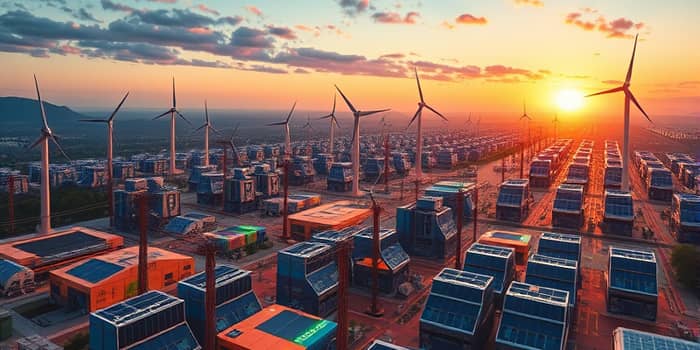
The transition to a low-carbon future relies on more than technology; it demands a comprehensive financial blueprint that channels capital toward resilient, adaptable, and eco-friendly power networks. In this article, we unravel the complex ecosystem of sustainable investments and demonstrate how stakeholders can align funding decisions with global climate objectives.
The term intelligent, interconnected and resilient networks captures the essence of the Green Grid. Unlike centralized models, these systems integrate renewable sources such as solar, wind, hydro, and geothermal, coupled with advanced storage solutions and digital controls. By decentralizing generation and embedding smart infrastructure, grids become more responsive to fluctuations in supply and demand, ultimately reducing carbon footprints and enhancing reliability.
At its core, the Green Grid is not merely a technical upgrade. It represents a paradigm shift that redefines energy distribution, prioritizes local engagement, and lays the groundwork for future innovations. Understanding this context is essential for investors seeking both impact and returns.
Effective deployment of a Green Grid also requires robust community-driven governance structures and cross-sector partnerships. By involving local authorities, utilities, and civil society, projects can tailor solutions to regional needs, build trust, and foster resilience.
Investing in sustainable energy infrastructure is no longer optional. Governments and corporations have pledged net-zero targets, and the financial sector increasingly prizes environmental performance alongside profitability. The benefits of timely action are manifold:
Delaying investment increases the risk of stranded assets, higher adaptation costs, and failure to meet climate targets. By acting now, investors can secure first-mover advantages in emerging technologies and markets.
Building a Green Grid involves layered innovations that work in harmony:
First, distributed generation and community solar arrays empower local stakeholders and minimize transmission losses. Rooftop panels and microgrids offer resilience against outages and natural disasters. In island communities, microgrid projects have reduced diesel dependence by over 80%.
Second, energy storage technologies—including lithium-ion batteries, flow batteries, and pumped hydro—balance intermittent renewable output and ensure continuous power availability. These systems are vital for peak shaving, frequency regulation, and providing backup during severe weather events.
Third, digitalization through AI, data analytics, and IoT devices enables real-time monitoring, predictive maintenance, and optimized dispatch of resources. Advanced metering infrastructure empowers consumers to participate in demand response programs, shifting consumption to off-peak hours and lowering overall system costs.
Innovations such as digital twins and blockchain-based peer-to-peer energy trading are pushing the frontier, creating transparent marketplaces for rooftop solar owners and electric vehicle battery storage services.
Reaching net-zero emissions by mid-century demands an unprecedented scale-up in grid investment. Annual spending must more than double from current levels to over $600 billion by 2030 and surpass $1 trillion per year from 2035 onward. Meeting these targets could reduce transition costs by nearly $3 trillion while delivering long-term economic benefits.
Despite clear need, emerging markets and developing economies (EMDEs) have seen a 40% drop in grid financing over the past decade, driven by concerns over currency volatility, policy uncertainty, and credit risks. Bridging this gap is essential for equitable energy access and global climate security.
Regions such as Southeast Asia and Sub-Saharan Africa offer high-growth opportunities: rapidly rising electricity demand, abundant solar potential, and increasing political support for renewables. Targeted blended finance structures and risk guarantees can unlock these markets.
Diverse financial instruments can unlock funding for grid modernization and renewable integration. Each vehicle balances risk and return to suit different investor profiles:
Risk management tools—such as guarantees, insurance products, and currency hedges—are critical to de-risk investments in frontier markets. Early involvement by development banks can catalyze private-sector participation.
Transparency and standardization are fundamental. The EU Taxonomy requires that at least 67% of generation capacity added in the last five years maintain carbon intensities below 100 gCO₂/kWh—criteria that currently exclude more than 60% of needed investments in some EMDEs.
The Sustainable Finance Disclosure Regulation (SFDR) classifies funds as Article 8 or Article 9, signalling varying degrees of sustainability ambition. Asset managers must report on principal adverse impacts, including GHG emissions, resource use, and social indicators.
Third-party verification, climate disclosures aligned with the Task Force on Climate-related Financial Disclosures (TCFD), and independent assurance of ESG data enhance credibility and investor confidence.
Policy frameworks must evolve to support innovation and investment at scale. Key measures include simplifying permitting for renewable and storage projects, establishing clear interconnection standards, and introducing dynamic pricing that reflects grid flexibility needs.
Governments can deploy auctions and feed-in tariffs to de-risk early-stage technologies. Regulatory sandboxes allow testing of novel business models such as peer-to-peer trading and virtual power plants without full-scale compliance burdens.
International cooperation on carbon pricing, emissions trading schemes, and cross-border electricity markets can further integrate regional grids and optimize resource use.
Despite strong fundamentals, several hurdles persist:
Proactive risk mitigation, stakeholder engagement, and capacity building are crucial to overcoming these obstacles. Partnerships between multilateral banks, governments, and the private sector can pool expertise and resources.
Global initiatives exemplify collaborative progress. The Green Grids Initiative (GGI) unites multilateral development banks and governments to advance best practices in project selection, financing, and measurement transparency. Its guiding principles emphasize accountability, scale, and local ownership.
Just Energy Transition Partnerships in countries such as South Africa, Indonesia, and Vietnam blend policy reform, concessional finance, and technical assistance to redirect capital flows away from coal toward renewables and grid modernization.
In Latin America, regional power pools are linking hydro, wind, and solar resources across borders, optimizing generation portfolios and reducing curtailment. These projects demonstrate how integrated planning can deliver both environmental and economic benefits.
The grid of the future will be decentralized, resilient, digitally managed, and powered predominantly by renewables. To realize this vision, stakeholders should:
1. Scale blended finance models that reduce risk and catalyze private capital.
2. Harmonize green taxonomies globally to streamline cross-border investment flows.
3. Invest in workforce development and reskilling programs to ensure a talent pipeline.
4. Leverage advanced analytics for continuous performance monitoring and adaptive planning.
Accelerating the energy transition demands both ambition and pragmatism. By aligning financial structures with sustainable goals, we can build a Green Grid that powers economies while safeguarding the planet for future generations.
Ultimately, structuring sustainable investments is as much about vision as it is about execution. With clear frameworks, robust measurement standards, and collaborative action, the Green Grid can transform our energy landscape and unlock a more resilient, equitable, and prosperous future.
References