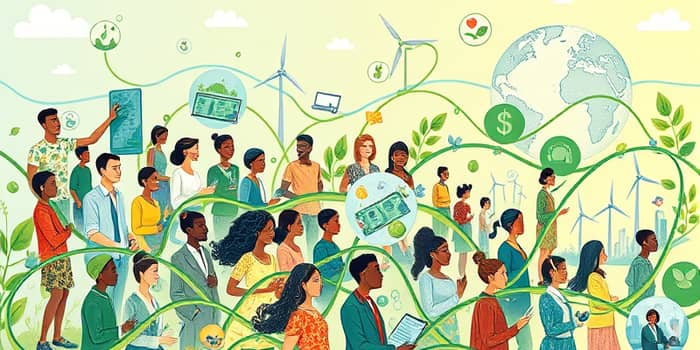
In an era where finance intersects with social conscience, ethical banking emerges as a transformative force. Institutions around the world are reimagining traditional models to embed values that resonate with customers and communities. This article delves into the principles, trends, drivers, and challenges shaping the future of this dynamic sector.
Ethical banking is defined as a transformative financial model that prioritizes social, environmental, and governance goals alongside fiscal responsibility. At its heart lie three pillars: transparency, sustainability, and equitable benefit distribution to stakeholders and ecosystems.
Green projects, renewable energy initiatives and microfinance schemes form the backbone of ethical finance portfolios. Ethical banks rigorously exclude financing for fossil fuels, arms manufacturing, child labor, and animal cruelty. Instead, they channel resources into mission-driven enterprises aligned with the UN Sustainable Development Goals, making every transaction part of a broader commitment to planetary well-being.
Within the ethical banking universe, distinct sub-segments have flourished:
From consumer banking and SME lending to carbon-neutral financing vehicles, this diverse ecosystem continues to expand its reach and influence.
The global banking and finance market is on a strong growth path, projected to rise from $18.1 trillion in 2024 to $28.05 trillion by 2031 at a CAGR of 6.0%. Within this broader industry, the ethical banking segment is outpacing traditional peers, driven by consumer and regulatory pressures.
Asia-Pacific leads in adoption thanks to rising consumer awareness, while North America posts the fastest expansion. Government mandates on ESG disclosure in the EU and the US further accelerate demand and shape competitive dynamics.
Several forces propel ethical banking forward, rewriting the rules of engagement:
These drivers underscore a broader societal shift where finance serves as a tool for positive impact rather than mere profit generation.
Innovation sits at the core of this transformation. Blockchain-enabled traceability and auditability promise to seal transaction records immutably, ensuring that funds truly support approved projects and meet sustainability criteria.
Meanwhile, AI-powered platforms are revolutionizing credit approvals and portfolio screening with AI-driven sustainability scoring and analytics. Cloud-based systems bolster operational resilience and scale embedded finance solutions seamlessly, while advanced data platforms enhance real-time ESG performance tracking.
Financial institutions are introducing an array of eco-friendly products and services:
New business models, such as digital-only ethical banks and fintech partnerships for real-time impact measurement, signal a future where agility and authenticity define competitive advantage.
As ethical banking expands, regulators demand consistent standards across markets. Global initiatives aim to harmonize ESG measurement, enforce AI auditing, and verify sustainability claims through third-party certifications such as the EY Sustainable Finance Index.
Operational alignment with evolving standards remains a priority for banks seeking to maintain credibility, avoid greenwashing accusations, and foster stakeholder trust.
Despite its promise, the sector faces significant obstacles that must be addressed collaboratively:
Surmounting these hurdles requires partnership between banks, regulators, technology providers, and community stakeholders to forge unified standards and share best practices.
The coming decade will determine which institutions thrive. Banks that weave ESG into their core strategy, rather than treating it as an auxiliary service, will capture market share and engender lasting trust among customers and investors.
Financial inclusion through microfinance and digital platforms in emerging markets will create pathways out of poverty and deliver on the promise of equal opportunity. Enhanced cross-industry collaborations among fintech innovators, big tech companies, and community organizations will drive ethical banking from a niche proposition to a mainstream norm.
Ultimately, the future of ethical banking rests on authenticity, measurable results, and unwavering commitment to stakeholder capitalism. Institutions embracing these imperatives will not only shape the next chapter of finance but also leave an indelible mark on global prosperity.
References