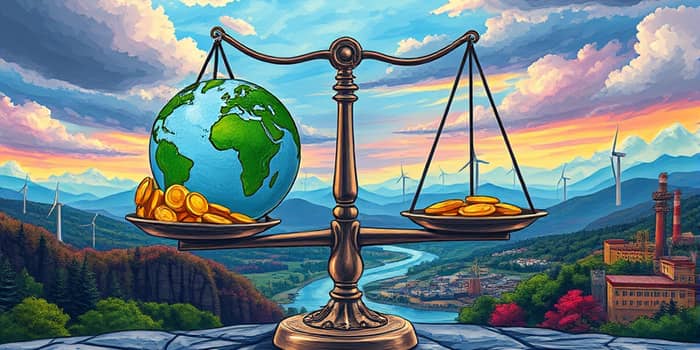
In a world where economic growth and environmental health often collide, businesses face an urgent question: can profit and planet coexist? As climate risks intensify and consumers demand accountability, finding harmony between financial success and ecological stewardship has never been more critical.
Since the Industrial Revolution, capitalism has propelled societies toward unprecedented prosperity. Yet this profit-driven economic expansion has frequently come at the expense of natural ecosystems. Fossil-fuel extraction, deforestation, and industrialization have accelerated greenhouse gas emissions, pushing global temperatures to record highs.
The 2010 Deepwater Horizon spill unleashed 4 million barrels of oil into the Gulf of Mexico over 87 days, exemplifying catastrophic environmental consequences when profit imperatives overshadow safety and stewardship. Such disasters underscore the complex legacy of growth at all costs.
Today’s leaders weigh sustainability against shareholder returns. Recent data reveal every decade since 1850 has been warmer than the last, and the past ten years were the hottest on record. Meanwhile, 72% of global consumers express unprecedented consumer demand for sustainable goods, with younger generations willing to pay premiums for ethical products.
Yet greenwashing abounds: Nestlé’s 2030 emissions target has only advanced 18% toward a 50% cut, while Shell achieved a mere 1% reduction against a court-ordered 45% goal. McKinsey estimates that failing to address emissions could jeopardize up to 20% of corporate profits by 2030, as regulations tighten and consumer preferences shift.
Examining real examples offers clarity on risks and rewards. Some firms remain mired in superficial pledges, while others pioneer transformative models. The table below contrasts commitments and outcomes for leading companies.
Leaders who embrace change unlock new value streams. By adopting innovative green technologies and practices, companies boost resilience and brand loyalty while cutting costs. Key approaches include:
These initiatives not only reduce environmental footprints but also deliver long-term savings and foster innovation.
Despite clear benefits, many organizations struggle with implementation. Common obstacles include:
Overcoming these hurdles requires leadership commitment, cross-functional collaboration, and a willingness to allocate resources for the future.
The momentum toward a greener economy is unmistakable. Regulators across major markets are tightening emissions standards, while investors demand robust climate disclosures. Advances in battery storage, carbon capture, and global momentum toward renewable energy promise to reshape energy systems.
Meanwhile, circular economy frameworks are expanding, and ethical supply chain transparency is becoming table stakes. Companies that integrate these trends early will secure competitive advantages and future-proof operations.
Balancing economic and environmental imperatives is no longer optional. The era of choosing between profit and planet is fading. With strategic vision and bold action, businesses can demonstrate that profitability and ecological stewardship go hand in hand. The path ahead demands innovation, accountability, and systemic change—but the rewards include resilient growth, enhanced reputation, and a healthier Earth for generations to come.
References