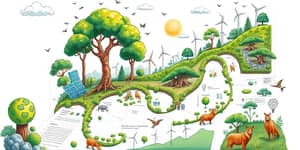
As biodiversity loss accelerates and climate risks mount, investors are recognizing the powerful role that nature can play in financial resilience. By aligning capital with ecological health, we can foster both economic growth and environmental restoration.
Over the past four years, private sector funding for nature has experienced a dramatic increase in private funding, soaring from $9.4 billion to over $102 billion. This shift has been driven by alternative investments, traded debt, and private equity vehicles seeking both impact and return.
Investment in global forests and nature-based climate solutions doubled between 2020 and 2024, reaching an annual flow of $23.5 billion. Water-focused nature-based solutions have similarly surged since 2016, more than doubling initial commitments.
Investing in nature goes beyond moral imperative; it makes robust economic sense. Potential savings from ecosystem restoration could reach $104 billion by 2030 and skyrocket to $393 billion by 2050. Every dollar put into forest restoration can yield up to $30 in ecosystem services—spanning water regulation, soil protection, and biodiversity enhancement.
Analysis suggests that transforming economic systems to prioritize nature could unlock unlock $10.1 trillion in business opportunities annually. Achieving these gains requires roughly $2.7 trillion per year in targeted investments.
Financial markets are rapidly innovating to channel capital toward nature-positive projects. Key instruments include:
Policy mechanisms and reporting standards are critical to scaling investments. The Global Biodiversity Framework, endorsed by 196 nations, calls for protecting 30% of land and ocean, cutting harmful subsidies by $500 billion annually, and mobilizing $200 billion per year toward biodiversity goals.
The cost of inaction is staggering. Continued degradation could impose $10–25 trillion in annual economic damages. Delaying interventions by a decade may double these burdens compared to immediate action.
Barriers remain formidable: ambiguous land tenure, insufficient local project pipelines, scarce data on returns, and limited finance access for smallholders. Overcoming these hurdles is essential to mobilize the estimated $460 billion per year needed to meet 2030 forest and land-use goals.
Emerging technologies are enhancing transparency and accountability. Satellite imagery and AI-powered monitoring and reporting enable real-time tracking of habitat change. Blockchain solutions secure transaction records, while remote sensing improves biodiversity data quality.
Nature-based sectors already employ over 30 million people worldwide, spanning forestry, agriculture, and ecosystem restoration. Expanding these efforts could create an additional 15 million green jobs by 2030, bolstering rural livelihoods and driving inclusive growth.
Emerging markets are at the forefront of innovation. Brazil and Indonesia are transforming from deforestation hotspots into conservation leaders by incentivizing sustainable land use. In Africa, Ghana and Gabon are scaling REDD+ programs, channeling carbon revenue back into forest governance and community development.
To meet global targets, we must amplify capital flows and strengthen partnerships. Investors can:
By investing in nature’s design as strategy, we unlock resilient economies, secure lasting returns, and safeguard the planet for generations to come. The time to act is now.
References