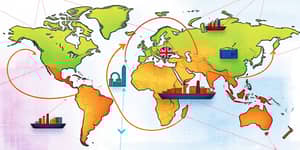
Blockchain technology has matured beyond its cryptocurrency roots, emerging as a transformative force in enterprise operations. By harnessing distributed ledgers, organizations are unlocking new levels of transparency, efficiency, and trust across multi-party workflows.
In this article, we explore the current state of enterprise blockchain adoption, the most impactful use cases, technical and regulatory hurdles, key investments, and strategic future directions. Our goal is to inspire leaders to embrace blockchain thoughtfully and achieve tangible business value.
What began as pilot projects is now a core initiative for global corporations. In 2025, 80% of Fortune 500 companies have deployed blockchain in areas like supply chain management, digital identity, and secure financial transactions. This dramatic shift underscores blockchain’s transition from theoretical promise to real-world application.
Market analysts forecast the global blockchain technology market to surge to $1.43 trillion by 2030, with a compound annual growth rate of 85% between 2023 and 2030. Other estimates predict blockchain spending will reach $94 billion by 2027, driven by both private and public sector investments. Notably, the US blockchain market is expected to hit $619 billion by 2034.
Enterprises are taking notice: more than 87% of surveyed organizations plan to invest in blockchain within the next year, signaling broad commitment to this disruptive technology.
Blockchain’s most compelling value emerges where trust, transparency, and complex workflows intersect. Leading use cases include:
Major retailers and luxury brands deploy blockchain for traceability and authenticity checks, reducing fraud and strengthening consumer trust. Financial institutions leverage distributed ledgers for faster payments, recordkeeping, and post-trade settlement. Real-world asset tokenization is booming in capital markets and real estate, while governments and healthcare providers turn to blockchain to secure sensitive records.
Enterprises are streamlining blockchain adoption through cloud platforms and advanced protocols. Leading providers now offer scalable, cloud-ready BaaS offerings that simplify network deployment, management, and security.
Interoperability is another focus: frameworks such as Hyperledger Cactus, Polkadot, Cosmos, and Chainlink CCIP enable disparate blockchains to communicate, unlocking transparent, tamper-proof data exchange across enterprise ecosystems.
Companies are integrating blockchain with artificial intelligence to enhance process automation and with IoT devices for real-time asset tracking. This convergence fuels more intelligent, responsive supply chains and industrial systems.
Adoption rates vary across regions but the overall momentum is global. APAC leads with a 69% year-on-year increase in 2025, driven by trade finance and digital identity initiatives. North America and Europe remain dominant, together accounting for over $4.8 trillion in blockchain transaction volume last year. Latin America and MENA are catching up, reporting strong growth as governments explore public-sector use cases.
Today, over 560 million individuals worldwide use blockchain services, with 85 million holding active wallets. This broad user base underpins enterprise confidence in scalable, secure blockchain deployments.
Despite its promise, blockchain integration faces several hurdles. Enterprises must tackle:
Addressing these issues requires cross-functional teams, clear business cases, and ongoing collaboration with regulators and industry consortia. By investing in standards bodies, talent development, and robust security protocols, companies can mitigate risks and accelerate deployment.
Enterprise and venture capital investments in blockchain reached $4.8 billion in the first half of 2025, focused on supply chain, IoT, real-world asset tokenization, and decentralized finance. While AI attracted over 53% of global tech funding during the period, blockchain remains a major beneficiary of strategic capital.
Large tech firms, financial institutions, and start-up consortia are pooling resources to develop interoperable platforms, build regulatory frameworks, and fund proof-of-concept projects that deliver measurable ROI.
Blockchain is not a one-size-fits-all solution, but a high-impact tool when deployed thoughtfully. In the coming years, organizations should prioritize:
By focusing on trusted and verifiable digital identities and trade finance platforms and cross-bank settlements, enterprises can unlock significant value. Markets predict compound growth rates between 25% and 85% across key regions, driven by North America, Europe, and APAC.
As blockchain continues to evolve, leaders must maintain agility, adapt to regulatory shifts, and measure outcomes rigorously. The organizations that succeed will be those that combine innovative technologies with strategic vision, forging new paths in digital transformation and industry collaboration.
References